
Anúncios
Walkie talkie apps have revolutionized instant communication, transforming smartphones into powerful push-to-talk devices that connect people across the globe in real-time.

Remember the excitement of using walkie talkies as kids? That instant connection, the thrill of pressing a button and hearing a friend’s voice crackle through the speaker? Today’s walkie talkie applications bring that same immediacy to our smartphones, but with capabilities that would have seemed like science fiction just decades ago.
Anúncios
Whether you’re coordinating a team at a construction site, organizing volunteers at a community event, or simply staying connected with family during outdoor adventures, walkie talkie apps offer a unique communication solution that bridges the gap between traditional two-way radios and modern messaging platforms.
📱 What Makes Walkie Talkie Apps Different from Regular Messaging
Unlike traditional text messaging or even voice calls, walkie talkie applications operate on a push-to-talk (PTT) principle. This fundamental difference creates an entirely unique communication experience that serves specific needs conventional apps simply can’t match.
Anúncios


When you press the talk button, your voice is transmitted instantly to recipients. There’s no dialing, no waiting for someone to answer, and no back-and-forth of “Hello? Can you hear me?” It’s immediate, efficient, and incredibly practical for fast-paced environments.
The one-to-many broadcast capability sets these apps apart as well. While you can certainly have one-on-one conversations, walkie talkie apps excel at group communication. A single message reaches everyone on the channel simultaneously, making coordination effortless.
🔊 Real-Time Communication Without the Wait
Traditional phone calls require both parties to be available simultaneously and engaged in the conversation. Text messages eliminate that simultaneity but introduce delays. Walkie talkie apps find the sweet spot between these two extremes.
Messages are delivered in real-time, but recipients don’t need to respond immediately. They can listen when convenient while still maintaining the conversational flow that makes coordination effective. This asynchronous-yet-immediate model proves invaluable in professional settings.
🎯 Top Use Cases for Walkie Talkie Applications
The versatility of walkie talkie apps extends across numerous industries and personal scenarios. Understanding where these tools shine helps you leverage their full potential.
Construction and Manufacturing Sites
Loud environments make phone calls nearly impossible. Walkie talkie apps cut through the noise, allowing instant communication between team members across sprawling job sites. Supervisors can broadcast safety alerts, coordinate deliveries, and respond to issues without leaving their stations.
The GPS features in many modern walkie talkie apps add another layer of utility, letting managers see where team members are located in real-time, optimizing workflow and enhancing safety protocols.
Event Coordination and Management
From music festivals to corporate conferences, event coordinators juggle countless moving parts. Walkie talkie apps enable seamless communication between security personnel, vendors, technical staff, and organizers.
Creating different channels for different teams prevents information overload while ensuring everyone receives relevant updates. The ability to quickly switch between channels makes managing complex events significantly smoother.
Outdoor Adventures and Recreation 🏕️
Hikers, campers, and outdoor enthusiasts appreciate walkie talkie apps for their ability to function in areas with limited cellular coverage. Many apps work over WiFi or can operate on minimal data connections, keeping groups connected even in remote locations.
Families at theme parks use these apps to coordinate meetups without burning through battery life on constant calls. The location-sharing features help parents keep track of kids in crowded venues.
Business and Retail Operations
Retail stores, restaurants, and hospitality businesses rely on quick communication between staff members. A server can notify the kitchen about a dietary restriction, or a sales associate can check inventory with a warehouse worker, all without leaving the customer’s side.
The professional appearance of using a smartphone app versus a traditional walkie talkie creates a more modern impression while providing superior functionality through features like message history and multimedia sharing.
🌟 Essential Features to Look For
Not all walkie talkie apps are created equal. The best applications combine reliability with features that enhance usability and expand functionality beyond basic push-to-talk communication.
Audio Quality and Clarity
Crystal-clear audio is non-negotiable. The app should deliver voices without distortion, static, or lag. Advanced noise cancellation helps filter out background sounds, ensuring messages remain intelligible even in chaotic environments.
Look for apps that automatically adjust audio levels, preventing loud transmissions from being overwhelming while boosting quieter messages for clarity.
Channel Management and Organization
The ability to create, customize, and manage multiple channels lets you organize communications logically. Public channels might serve general announcements, while private channels handle sensitive information.
User permissions control who can speak, who can only listen, and who can invite new members. This hierarchical structure proves essential for organizations with clear command chains.
Cross-Platform Compatibility 🔄
The best walkie talkie apps work seamlessly across iOS, Android, and even desktop platforms. This universality ensures no team member gets left out due to device preferences.
Cloud synchronization keeps conversation history accessible across all devices, allowing you to switch from phone to tablet to computer without missing a beat.
Offline and Low-Connectivity Performance
While most walkie talkie apps require internet connectivity, some offer degraded but functional performance on weak connections. Others can store and forward messages when connectivity returns, preventing communication gaps.
Battery optimization features ensure the app doesn’t drain your phone’s power, especially important during long shifts or extended outdoor activities.
🛡️ Privacy and Security Considerations
Transmitting voice communications over the internet raises legitimate privacy concerns. Understanding how walkie talkie apps handle your data helps you choose platforms that align with your security requirements.
End-to-End Encryption
Premium walkie talkie applications implement end-to-end encryption, ensuring only intended recipients can decrypt and hear your messages. This protection prevents interception by malicious actors or unauthorized surveillance.
Verify whether encryption applies to live voice streams or only to stored message history. Comprehensive protection covers both scenarios.
Data Storage and Retention Policies
Different apps maintain different policies regarding how long they store your voice messages. Some automatically delete transmissions after a set period, while others maintain indefinite archives.
For sensitive business communications, understanding and controlling data retention becomes crucial for compliance with regulations like GDPR or industry-specific requirements.
💡 Tips for Maximizing Walkie Talkie App Effectiveness
Getting the most from your walkie talkie app requires more than just downloading and pressing buttons. These strategies enhance communication quality and team coordination.
Establish Clear Communication Protocols
Simple radio etiquette prevents confusion and keeps conversations organized. Ending transmissions with “over” signals you’ve finished speaking. Identifying yourself before speaking helps listeners know who’s talking, especially in large groups.
Keeping messages concise respects everyone’s time and prevents channel congestion. Save detailed discussions for phone calls or in-person meetings.
Optimize Your Setup
Using headphones with an integrated microphone improves audio quality for both transmission and reception. It also provides privacy in public settings and frees your hands for other tasks.
Test your setup before critical operations. Verify audio levels, check battery status, and confirm channel assignments to avoid technical issues during important communications.
Leverage Advanced Features Strategically ⚡
Many walkie talkie apps include features beyond basic PTT. Voice-to-text transcription creates searchable records of communications. Location sharing helps coordinate field teams. Photo and video messaging supplements voice communication when visual context matters.
Don’t overwhelm users with too many features simultaneously. Introduce advanced capabilities gradually as your team becomes comfortable with basic operations.
🚀 The Future of Push-to-Talk Communication
Walkie talkie apps continue evolving, incorporating technologies that expand their capabilities and applications. Understanding emerging trends helps you anticipate future possibilities.
Integration with IoT and Smart Devices
Forward-thinking developers are integrating walkie talkie functionality with smartwatches, allowing hands-free communication through wearable devices. Voice assistant integration lets you send messages through Siri, Google Assistant, or Alexa.
Industrial applications see walkie talkie apps connecting with safety equipment, automatically triggering alerts when sensors detect hazardous conditions.
AI-Powered Enhancements
Artificial intelligence brings powerful capabilities to walkie talkie platforms. Real-time translation breaks language barriers, enabling international teams to communicate seamlessly. AI-powered transcription creates automatic documentation of all communications.
Smart noise filtering uses machine learning to distinguish voices from background sounds more effectively than traditional audio processing, improving clarity in challenging environments.
Expanded Network Capabilities 📡
As 5G networks become ubiquitous, walkie talkie apps will leverage higher speeds and lower latency for even more immediate communication. Mesh networking capabilities could enable device-to-device communication when internet connectivity isn’t available.
Hybrid systems combining traditional radio frequencies with internet connectivity offer redundancy and reliability that pure software solutions can’t match.
🎭 Choosing the Right Walkie Talkie App for Your Needs
With dozens of walkie talkie applications available, selecting the right one requires evaluating your specific requirements against each platform’s strengths.
Consider Your Primary Use Case
Professional applications prioritize reliability, administrative controls, and integration with enterprise systems. Recreational apps emphasize user-friendliness, fun features, and social connectivity.
Evaluate whether you need one-on-one communication primarily, or if group coordination represents your core requirement. Some apps excel at managing large channels with hundreds of participants, while others optimize for small, intimate groups.
Assess Technical Requirements
If your team uses older devices, verify compatibility across your entire device ecosystem. Battery consumption varies significantly between apps, with some optimized for all-day use and others draining power quickly.
Data usage matters for teams with limited cellular plans. Some walkie talkie apps compress audio aggressively to minimize data consumption, while others prioritize quality over bandwidth efficiency.
Evaluate Cost vs. Value 💰
Free walkie talkie apps often include advertisements or limit channel capacity and features. Paid subscriptions unlock advanced capabilities, remove ads, and provide better support.
For business applications, the cost per user typically decreases with larger teams. Calculate total cost of ownership including training, administration time, and any required hardware like headsets.
🌍 Real-World Success Stories
Seeing how others successfully implement walkie talkie apps provides inspiration and practical insights for your own deployment.
Emergency Response Coordination
During natural disasters, traditional communication infrastructure often fails. Volunteer organizations have successfully used walkie talkie apps operating over satellite internet to coordinate rescue efforts, distribute supplies, and locate survivors.
The ability to create ad-hoc communication networks without relying on cellular towers proved invaluable in scenarios where traditional emergency radio systems became overwhelmed.
Educational Institutions
Schools and universities deploy walkie talkie apps for security teams, maintenance staff, and event coordinators. The instant communication capability enhances emergency response while improving daily operational efficiency.
During lockdown drills or actual emergencies, the ability to silently receive updates while monitoring situations provides critical advantages over traditional communication methods.
📊 Comparing Communication Methods
| Feature | Walkie Talkie Apps | Traditional Radios | Phone Calls | Text Messages |
|---|---|---|---|---|
| Instant Communication | ✅ Yes | ✅ Yes | ❌ Requires answer | ❌ Delayed |
| One-to-Many | ✅ Yes | ✅ Yes | ❌ Limited | ⚠️ Group texts |
| No Additional Hardware | ✅ Uses smartphone | ❌ Requires radio | ✅ Uses phone | ✅ Uses phone |
| Message History | ✅ Usually stored | ❌ Not recorded | ⚠️ Call logs only | ✅ Full history |
| Works Offline | ❌ Needs internet | ✅ Yes | ❌ Needs network | ❌ Needs network |
| Cost | 💰 Low/Free | 💰💰 Equipment cost | 💰 Plan dependent | 💰 Plan dependent |
🔧 Troubleshooting Common Issues
Even the best walkie talkie apps occasionally encounter problems. Knowing how to quickly diagnose and resolve common issues keeps your communications flowing.
Poor Audio Quality
If recipients report garbled or choppy audio, check your internet connection first. Weak WiFi or cellular signals degrade voice quality. Moving to an area with better connectivity often resolves the issue immediately.
Ensure your microphone isn’t obstructed and that you’re holding the device appropriately. Background noise can overwhelm the microphone, so try moving to a quieter location or using a headset.
Connection Problems
Difficulty connecting to channels or frequent disconnections typically indicate network issues. Verify that the app has necessary permissions to access your microphone and internet connection.
Restarting the app often clears temporary glitches. If problems persist, clearing the app’s cache or reinstalling may resolve deeper technical issues.
Battery Drain Concerns 🔋
Walkie talkie apps can consume significant battery when constantly listening for incoming messages. Most apps include battery-saving modes that reduce background activity.
Adjusting notification settings, limiting location services when not needed, and closing the app completely when not in use extend battery life substantially.
✨ Making the Transition from Traditional Communication
Switching your team from traditional radios, phone calls, or text messages to a walkie talkie app requires thoughtful planning and execution. Successful transitions share common characteristics.
Start with a pilot program involving a small subset of your team. Gather feedback, identify pain points, and refine your implementation before rolling out organization-wide. This phased approach minimizes disruption while maximizing learning.
Provide adequate training focused not just on technical operation but on communication best practices. Help team members understand when walkie talkie apps represent the optimal communication method versus when alternatives might be more appropriate.
Celebrate early wins and share success stories. When team members see tangible benefits—faster response times, improved coordination, reduced frustration—adoption accelerates naturally.
🎯 Your Next Steps Toward Better Communication
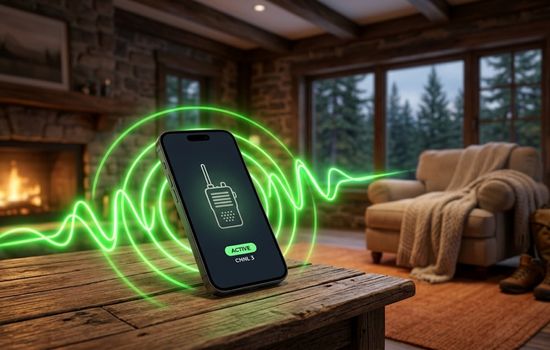
Walkie talkie apps represent a powerful communication tool that bridges instant voice communication with modern smartphone capabilities. Whether you’re managing a construction crew, coordinating volunteers, organizing family activities, or running retail operations, these applications offer unique advantages that traditional communication methods simply can’t match.
The key lies in choosing an app that aligns with your specific needs, implementing it thoughtfully, and training your team to use it effectively. Start by identifying your core communication challenges, then evaluate which walkie talkie app features address those pain points most directly.
Download a highly-rated walkie talkie app today and explore its capabilities. Invite a few colleagues or friends to join you for testing. Experience firsthand how push-to-talk communication transforms coordination and collaboration. The instant you press that button and hear an immediate response, you’ll understand why walkie talkie apps are revolutionizing how teams stay connected.
Communication technology continues evolving, but the fundamental human need for instant, reliable connection remains constant. Walkie talkie apps marry cutting-edge technology with intuitive, battle-tested communication methods, creating tools that feel both familiar and futuristic. Embrace this technology, and discover how it can transform the way your team works, plays, and stays connected.